Every credit comes back as content.
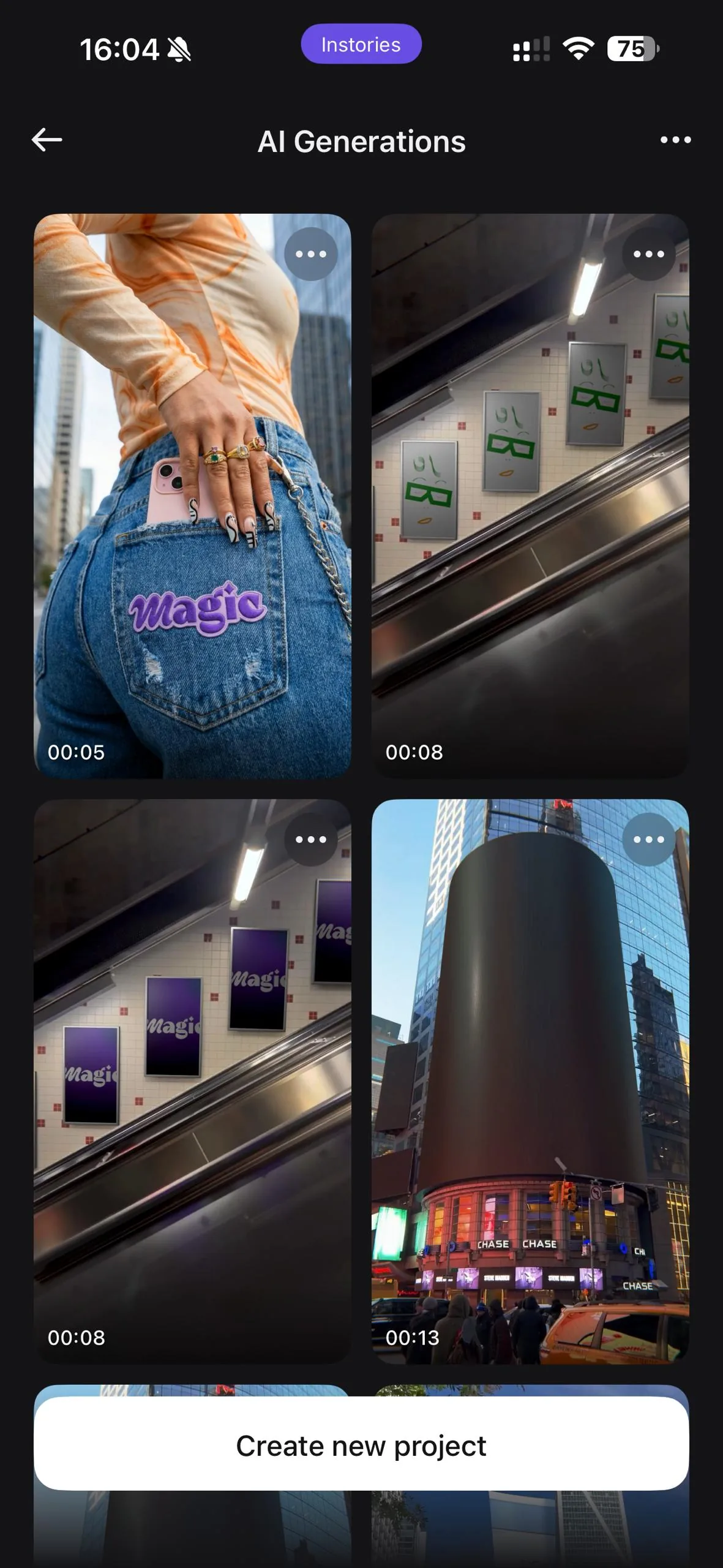
Instories is a top-ranked Reels app with 25 million downloads. Its users aren't designers — they can't fix a bad generation, only pay for another one. Instories put the Magic API behind its AI effects and has run 57,432 generations through it, buying credits months ahead because the renders land first time.
A failed generation has no good outcome
Put a generative model in front of a professional and a bad output is an inconvenience — they re-prompt and move on. Put it in front of a consumer and there is no recovery: they can't fix the render, they can only pay for another one. Whichever way you monetise generation, that's the worst case — a retry is either pure cost of goods or revenue extracted from frustration, and both come back as churn and one-star reviews. Predictability doesn't mean users generate less; it means the same credits go to five finished videos instead of five attempts at one. The yield rises.
Why they buy credits months ahead
Instories integrates several AI providers. The others are general-purpose — send a prompt, get a sample, hope. Magic renders come out of purpose-built templates, so the output is known before it is generated. It lands first time, at a higher yield per credit and a lower cost per render, and it comes back finished, not raw.
Something only they have
Alongside the API we build exclusive scenes for Instories — effects its users can't get anywhere else, which is the whole reason a template app keeps a supplier.
Putting generation in front of consumers?
If your users pay per generation and can't rescue a bad one, predictability is the whole product. Our API drops into your flow, we build templates only you have, and the credits your users spend come back as content they post.
Talk to MagicPublished with Instories' permission. Download, rating and template figures are from public App Store listings. Generation volume is Magic platform data, August 2026.