VR space audits: designing buildings around how people actually feel
Here’s the uncomfortable truth about architecture: we usually find out whether a space works after we’ve built it. The renders looked great. The plan made sense on paper. Then people move in — and avoid the echoey lobby, cut across the lawn instead of the path, feel cramped in the room that measured fine on a drawing. By then, changing anything costs a fortune.
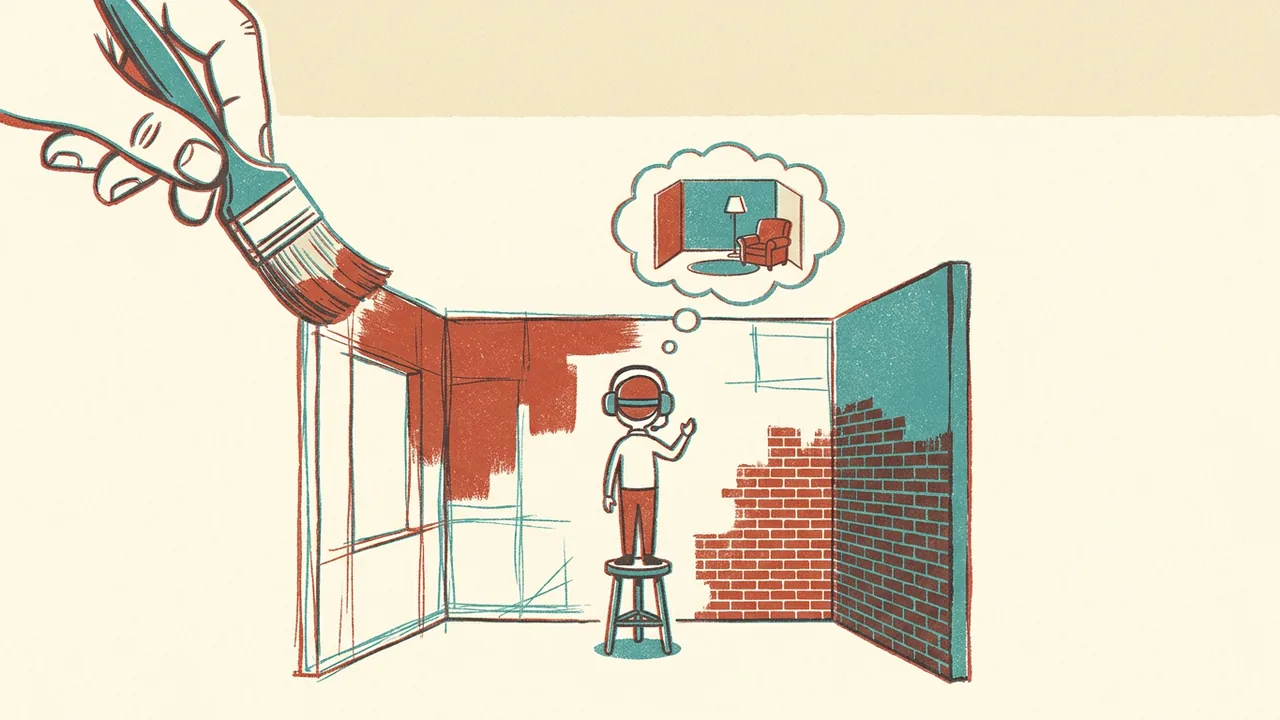
A VR space audit flips the order. Instead of asking people to imagine a space from a floor plan, you put them inside it in virtual reality and quietly measure how they respond — before a single wall is poured.
Why opinions about space are unreliable
Ask someone “do you like this room?” and you get a polite, rationalised answer. Their body tells a different story: where their eyes go first, where they slow down, where they tense up, what they walk towards and what they avoid. Space is felt before it’s judged. The job of an audit is to capture that pre-verbal response instead of the after-the-fact opinion.
How a VR space audit works
The method I’ve developed in the VR Space Audit project has three stages:
1. Observe
Present a 360° environment to people in VR — a stereo photo of a real place, a computer-generated design, or a styled mood-board room. The point is to give an experience realistic enough that the body responds as it would on site.
2. Process
While they explore, the platform anonymously tracks behaviour: gaze and head movement, where attention lingers, and — where appropriate — voice and semantic reactions. The signal isn’t “7 out of 10.” It’s the map of what actually drew or repelled them.
3. Implement
That behaviour becomes an emotional heatmap and a comparison across options. Suddenly a design choice — this façade or that one, this ceiling height, this route — has evidence behind it instead of a committee’s taste.
The goal isn’t to replace the architect’s judgement. It’s to give it data it never had access to before.
Why this matters beyond architecture
The same loop — simulate, observe behaviour, decide — applies far beyond buildings. Retail layouts, exhibitions, transport hubs, workplaces, even digital products. Anywhere people move through an environment and you care how they feel, you can test it before you commit budget to it. It’s a concrete example of spatial intelligence doing useful work: software that understands space and behaviour well enough to inform a real decision.
Doing it responsibly
Behavioural data is sensitive by definition. The version worth building is anonymous and aggregate — you want the pattern across many people, never a file on any one person. Done that way, a VR space audit is one of the rare tools that makes design both more human and more accountable.
Considering a space, exhibition, or product in VR?
I help teams decide whether and how to test experiences before they build them. Book a 1:1 call.
Book a call →