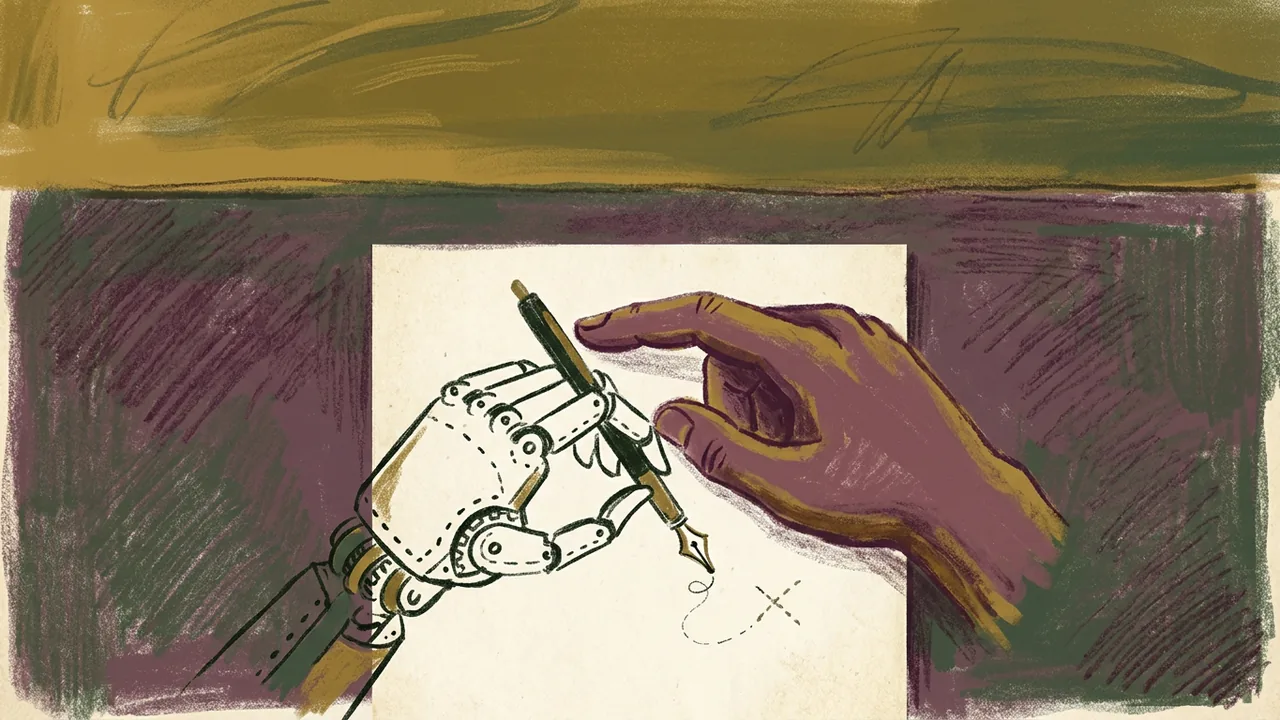
AI and human expertise: symbiosis, not replacement
Every wave of AI arrives with the same headline: this is the one that replaces the experts. It never quite happens — and in spatial computing, where I work, the opposite is true. The most powerful pattern isn’t AI instead of people. It’s AI plus people: a tight symbiosis where the machine handles scale and the human keeps the judgement.
I think of it as a simple trio: space + data + expert. VR and sensors give us an accurate model of a space. Big data makes that model meaningful at scale. But the architect, the designer, the planner — the human — stays the decision-maker. Remove any one and it gets worse: data without expertise is noise; expertise without data is guesswork; both without a human to decide is just a dashboard nobody acts on.
AI doesn’t remove the expert. It gives the expert a kind of leverage they’ve never had before.
What the machine is good at
AI is extraordinary at the things humans do badly or slowly: processing millions of data points, spotting patterns across a whole city, generating a hundred options in the time it takes to sketch one, tracking behaviour no person could watch in real time. In a VR space audit, it’s the machine that turns thousands of tiny reactions into a readable emotional heatmap. That’s real, useful power.
What the human is good at
And then there’s everything the machine can’t do: knowing which question is worth asking, reading context and culture, taking responsibility for a decision, holding a point of view. An AI can tell you what people looked at; only a person can decide what it means and what to do about it. Taste, ethics, intent — these don’t come out of a model.
Designing the loop
The practical art is building the handoff well. A few rules I use:
- Let AI propose; let humans dispose. The machine generates and surfaces; the person selects and commits.
- Make the AI legible. If an expert can’t see why the system suggested something, they can’t trust or correct it.
- Keep the human upstream and downstream. People should shape the inputs (guiding the model with real material) and own the outputs — an idea I dig into in guided AI beats the magic button.
- Include the non-expert too. Sometimes the human in the loop is a citizen contributing to a city model, not a specialist — and that participation makes the result better and more legitimate.
Why this is the optimistic view
Framing AI as a replacement makes everyone defensive and tends to produce worse products — systems that hide their workings and ask for blind trust. Framing it as symbiosis produces better ones: tools that make a good architect great, a small team mighty, and an ordinary citizen genuinely able to shape their city. That’s the future I’m building toward — not artificial intelligence against human expertise, but a powerful partnership between them.
Designing where AI hands off to people?
Getting that loop right is the difference between a tool people trust and one they ignore. Book a 1:1 call.
Book a call →