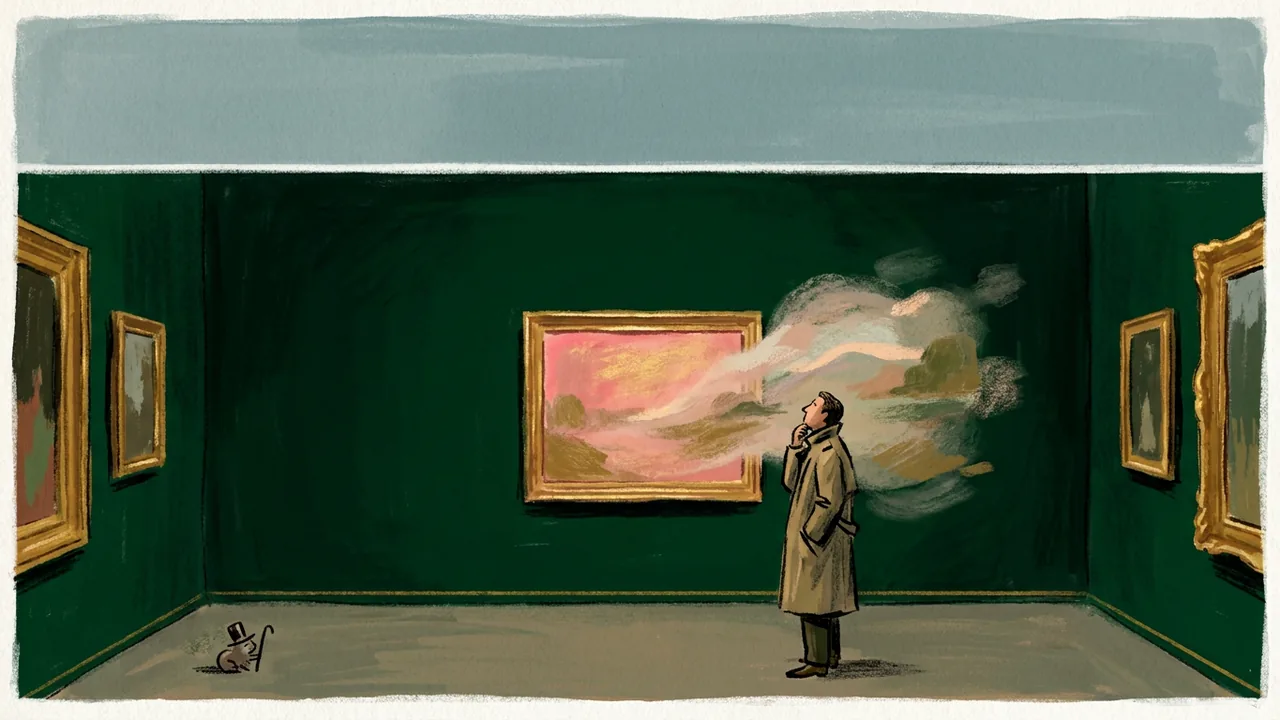
Designing immersive experiences for museums and culture
Museums are in a quiet competition with the phone in every visitor’s pocket. A static label next to an object can’t out-stimulate an infinite feed. So the temptation is to fight fire with fire — screens everywhere, AR overlays on everything, a headset at every plinth. Most of it fails, and it fails for a reason worth understanding before you spend a budget on it.
Cultural and heritage institutions sit firmly in my world of work, and the lesson that keeps repeating is simple: immersive technology in a museum should deepen attention on the object, not compete with it.
The trap: spectacle over meaning
It’s easy to build something that makes people say “wow” and then walk out remembering the effect, not the artefact. If a visitor recalls the AR dragon but not the 14th-century manuscript it was hovering over, the experience failed the institution’s actual mission. Spectacle is cheap; meaning is the point.
Principles that hold up
- Reveal, don’t replace. The best immersive layer shows what the eye can’t: the original colour of a faded fresco, the city that once surrounded a ruin, the hidden mechanism inside an object. It adds a dimension to the real thing rather than substituting a screen for it.
- Earn the interruption. Every prompt to look at a device is attention taken away from the room. It has to pay that back with something genuinely worth it.
- Design for the crowd, not the demo. A flowing gallery on a busy Saturday is the real test — not a quiet press preview. Throughput, comfort, and hygiene of shared hardware matter more than peak wow.
- Accessibility widens the audience. Layered digital content can offer multiple languages, depths, and reading levels — turning one exhibition into many, for many kinds of visitor.
The measure of a good immersive exhibit isn’t how impressive the technology is. It’s how much more closely people look at the real thing because of it.
A lesson from building a museum in the metaverse
We built a metaverse experience for the Hermitage — one of the largest museums in the world — and the most useful lessons were the unglamorous ones. The biggest surprise was how stubbornly the standards of the physical world follow you into the digital one. Museum labels, for instance, have conventions that are centuries old: exact sizes, exact placement. To honour them, our team ended up literally measuring objects in the virtual space by hand — building a giant virtual ruler and cube to get the proportions of every label right, because “close enough” looks wrong to anyone who knows the real galleries.
There were human moments too — visitors forgetting to mute their microphones, the occasional attempt to “walk off” with a painting. They sound like bugs, but they’re really the same point: people bring the habits and expectations of the physical world into the digital one. The institutions that succeed don’t fight that — they design for it. Faithfulness to the real thing isn’t a constraint on the digital version; it’s what makes it feel legitimate.
VR’s special role
Where AR enhances the object in front of you, VR can transport you to what no longer exists or can’t be entered — a reconstructed site, a lost interior, a moment in time. It’s powerful precisely because it’s total, which also makes it demanding: comfort, pacing, and length have to be handled with care, or the experience becomes a queue-clogging novelty. The same discipline behind a VR space audit — designing around how people actually feel in a space — applies directly here.
How to brief it
Start from the curatorial intent, never the technology. What do you want a visitor to understand, feel, or notice that the object alone can’t convey? Answer that first, and the right medium — AR, VR, projection, or simply a better label — usually becomes obvious. The institutions that get this right treat immersive tech as a storytelling instrument, not a headline.
For the broader shift this sits inside, see what spatial intelligence is.
Planning an immersive exhibition or cultural experience?
I advise teams on making immersive serve the story, not overshadow it. Book a 1:1 call.
Book a call →